← All Posts

·4 min read

How to Build a Successful VFX Artist Career in the Current Film Industry

, and uniform.css sizes any
         main h1 at the page-title scale (.definitive-interior main h1), so
         one landed mid-read at 60px. The cap carries the page class to out-
         specify that rule, and covers the whole family at reading scale. */
      .blog-page .blg-wrap .blg-body h1, .blog-page .blg-wrap .blg-body h2,
      .blog-page .blg-wrap .blg-body h3, .blog-page .blg-wrap .blg-body h4 { margin: 2rem 0 0.75rem; font-family: "Playfair Display", Georgia, serif; font-weight: 400; line-height: 1.3; color: rgb(244 241 235 / 0.95); text-transform: none; letter-spacing: normal; max-width: none; }
      .blog-page .blg-wrap .blg-body h1, .blog-page .blg-wrap .blg-body h2 { font-size: clamp(1.15rem, 1rem + 0.8vw, 1.45rem); }
      .blog-page .blg-wrap .blg-body h3 { font-size: clamp(1.05rem, 0.95rem + 0.55vw, 1.3rem); }
      .blog-page .blg-wrap .blg-body h4 { font-size: clamp(1rem, 0.95rem + 0.3vw, 1.12rem); }
      /* A photo run is not a paragraph - it breaks out past the reading
         measure to ONE width token and packs like the photography archive.
         CSS columns balanced the run into three ragged stacks: a column ran
         long and dangled a photograph below the others, a wide frame overran
         the square its neighbours implied, and a hole opened where the last
         short column stopped. The rows are JUSTIFIED instead - solved at
         build time in galleryize.py, shipped as explicit flex rows.
         A cell's --a is its native aspect. flex-grow:var(--a) over a zero
         basis hands each photo in a row the width a_i x h out of the row's
         free space, so every photo in the row stands at the same height h
         and the last one lands exactly on the right edge - flush left AND
         right, nothing cropped, no measurement on the page. */
      .blg-body { --blg-wide: min(68rem, 92vw); --blg-gap: 0.62rem; }
      .blg-gallery { width: var(--blg-wide); margin: 2rem 0 2.2rem; margin-inline: calc(50% - var(--blg-wide) / 2); display: flex; flex-direction: column; gap: var(--blg-gap); }
      .blg-row { display: flex; column-gap: var(--blg-gap); width: var(--rw, 100%); margin-inline: auto; }
      .blg-nb { display: none; }
      .blg-gallery .blg-cell { flex-grow: var(--a, 1); flex-shrink: 1; flex-basis: 0; min-width: 0; aspect-ratio: var(--a, 1.5); margin: 0; padding: 0; overflow: hidden; border-radius: 0.3rem; background: #0b0d12; cursor: pointer; opacity: 0; transform: translateY(18px); transition: opacity 620ms cubic-bezier(0.22, 0.61, 0.21, 1), transform 740ms cubic-bezier(0.22, 0.61, 0.21, 1); }
      .blg-gallery .blg-cell.is-in { opacity: 1; transform: none; }
      .blg-gallery .blg-cell img { display: block; width: 100%; height: 100%; object-fit: cover; margin: 0; border-radius: 0; opacity: 0.86; transition: transform 760ms cubic-bezier(0.22, 0.61, 0.21, 1), opacity 420ms ease; }
      .blg-gallery .blg-cell:hover img, .blg-gallery .blg-cell:focus-visible img { opacity: 1; transform: scale(1.02); }
      .blg-gallery .blg-cell:focus-visible { outline: 1px solid var(--kls-accent, #fb5607); outline-offset: 2px; }
      /* the run measures itself against the article COLUMN, so the index
         rail simply narrows it - no second width rule for the railed page */
      @supports (container-type: inline-size) {
        .blg-wrap { container-type: inline-size; }
        .blg-body { --blg-wide: min(68rem, 100cqw); }
      }
      /* The phone keeps the grid - 2-up rows out of the same packer at a
         smaller row height, never one full-screen photograph per screen.
         The desktop rows dissolve (display:contents) and the build-time
         narrow breaks drive the lines instead, so one set of photographs
         serves both plans. */
      @media (max-width: 760px) {
        .blg-body { --blg-gap: 0.5rem; }
        .blg-gallery { flex-direction: row; flex-wrap: wrap; column-gap: var(--blg-gap); row-gap: 0; margin-bottom: 1.8rem; }
        .blg-row { display: contents; }
        .blg-nb { display: block; flex: 0 0 100%; height: var(--blg-gap); }
      }
      @media (prefers-reduced-motion: reduce) { .blg-gallery .blg-cell { opacity: 1; transform: none; transition: none; } }
      /* A short line stranded between two photo runs read as a fragment
         someone forgot to delete. It is the author's own beat - so it is set
         as one: centred, given air on both sides, a step up in scale. The
         builder finds it; not a word of it is moved or rewritten. */
      .blg-body .blg-beat { margin: clamp(2.4rem, 5.5vh, 3.6rem) auto; max-width: 34rem; text-align: center; }
      .blg-body .blg-beat p, .blg-body .blg-beat div { margin-left: auto; margin-right: auto; }
      /* Squarespace put white-space:pre-wrap INLINE on these paragraphs, so
         the source indent after each  printed as a real leading space
         and every line after the first sat 3px right of centre. pre-line
         keeps the author's line breaks and drops the indentation; it has to
         out-rank an inline style, hence the !important, and it is scoped to
         the beat alone. No character of the copy changes. */
      .blg-body .blg-beat p { margin-top: 0; margin-bottom: 0.4rem; white-space: pre-line !important; font-family: "Playfair Display", Georgia, serif; font-size: clamp(1.2rem, 1rem + 1vw, 1.65rem); line-height: 1.4; color: rgb(244 241 235 / 0.94); }
      .blg-body .blg-beat p:last-child { margin-bottom: 0; }
      /* end blg-gallery */


    Skip to content


          ← All Posts
          Aug 4, 2022·4 min read
          How to Build a Successful VFX Artist Career in the Current Film Industry

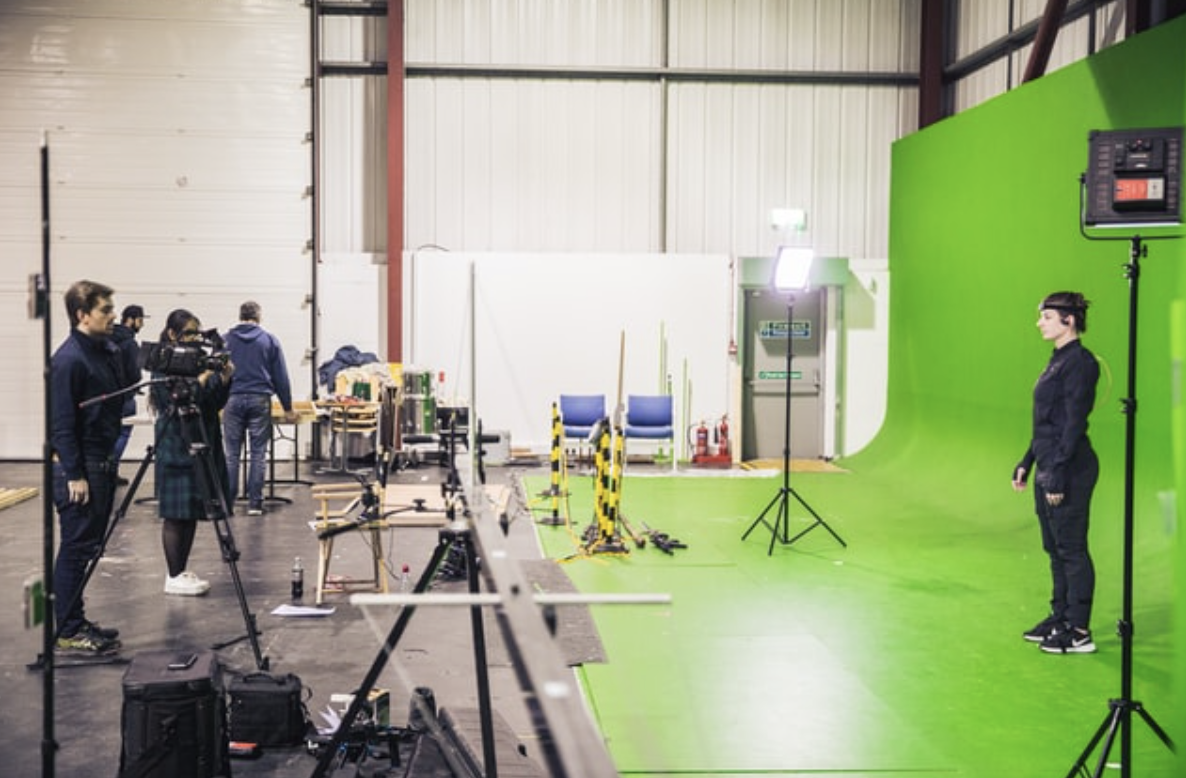
URL: https://unsplash.com/photos/CPXS543H19Y 

Alt-Text: A group of people in a room recording a video with a green screen background using a camera and videography equipment. 

Caption: Coding bootcamps, online courses, and college programs are some educational routes that can prepare you for a career in VFX and animation.  

The world of CGI and visual effects is making great strides in the current film industry and opening an array of career possibilities for aspiring VFX artists. If a career in 3D modeling, animation, technical directing, and concept art interests you, then visual effects is the field for you. 

Today Marvel superheroes, Disney animation, and A24 horror films have heightened the demand for VFX artists. Mastering narrative video production, animation, and computer-generated imaging will help you enter this competitive movie and film industry. The pathways to building a successful VFX career should incorporate both education and experience. 

Best Education Pathways to Become a VFX Artist

Getting a university degree isn’t a must to land a lucrative VFX artist position. The field allows for ample education qualification flexibility. VFX artists today enter the field via coding bootcamp certifications, online courses, or certificate programs. It is essential to choose a specific VFX training program to accelerate your career goals. 

Find an Animation and 3D Modeling Bootcamp

Animation bootcamps will train you with in-demand VFX skills in a matter of a few weeks to a few months. They will equip you with texture art, animation, compositing, and 3D modeling skills essential for a VFX career. They also provide extensive career placement services and will prepare you to meet the film industry’s skill demands. 

General Assembly is a popular VFX art bootcamp that is also among the top 40 online coding bootcamps. It offers a 3D Modeling and Animation program. Attending an online or in-person coding bootcamp is best suited for those looking to get job ready within a short time frame. 

Enhance Your Foundational VFX Skills With Online Courses 

For those of you who want shorter, flexible, and cheaper educational routes, massive open online course platforms are for you. Udemy, Coursera, and Edx.org offer short animation and VFX courses that will help you acquire foundational to intermediate skills. Opting for course certifications is also a great portfolio booster that can kickstart your freelance journey. 

Enhance Your Candidacy With a College Degree

Although the world of video production and VFX art does not demand a university degree, having one will provide you with an advantage in the job pool. An associate or a bachelor’s program in visual effects and animation will prepare you for a career in narrative and commercial video production. 

Get Job-Ready With Polished Visual Effects Skills

Learning visual effects art and technology is the first step to building a successful VFX career but mastering VFX art skills will help solidify your position in the film industry. VFX is a diverse field that branches into a wide range of graphics, video production, and animation fields. A VFX artist must master both technical and soft skills to succeed in this creative tech profession. 

Practice Animation and Motion Graphics 

Animation and motion graphics play a key role in the VFX production process. You need to practice storytelling, graphic design, and 3D animation. Doing projects with Blender, Adobe After Effects, Houdini, Cinema 4D, and other popular animation tools is a great way to boost your technical skills. 

Acquire Expertise in CGI and Video Production 

Video production, computer-generated imaging, and compositing form the crux of VFX art. You need to polish your budget and production management skills along with technical VFX skills to meet the industry’s requirements. 

Computer-generated imaging is constantly evolving and keeping up with the latest CGI software is pertinent to becoming a successful VFX artist. Add Daz Studio, Autodesk Maya, and Bryce projects to your CGI portfolio. 

In Summary

VFX and special effects is a growing field and is projected to grow by 16 percent between 2020 to 2030 by the United States Bureau of Labor Statistics. The profession offers opportunities to work with the latest motion graphics and CGI tools and make strides in the current film sector.  Forming a strong job profile by combining industry-relevant skills and educational qualifications is the pathway to becoming a VFX artist in the film industry. 

http://www.kyleloftusstudios.com